

Trump Planning to Designate the Strait of Hormuz a U.S. Territory!
Trump vows to make Strait of Hormuz U.S. territory, asserting American dominance over vital energy corridor amid Iran conflict tensions.

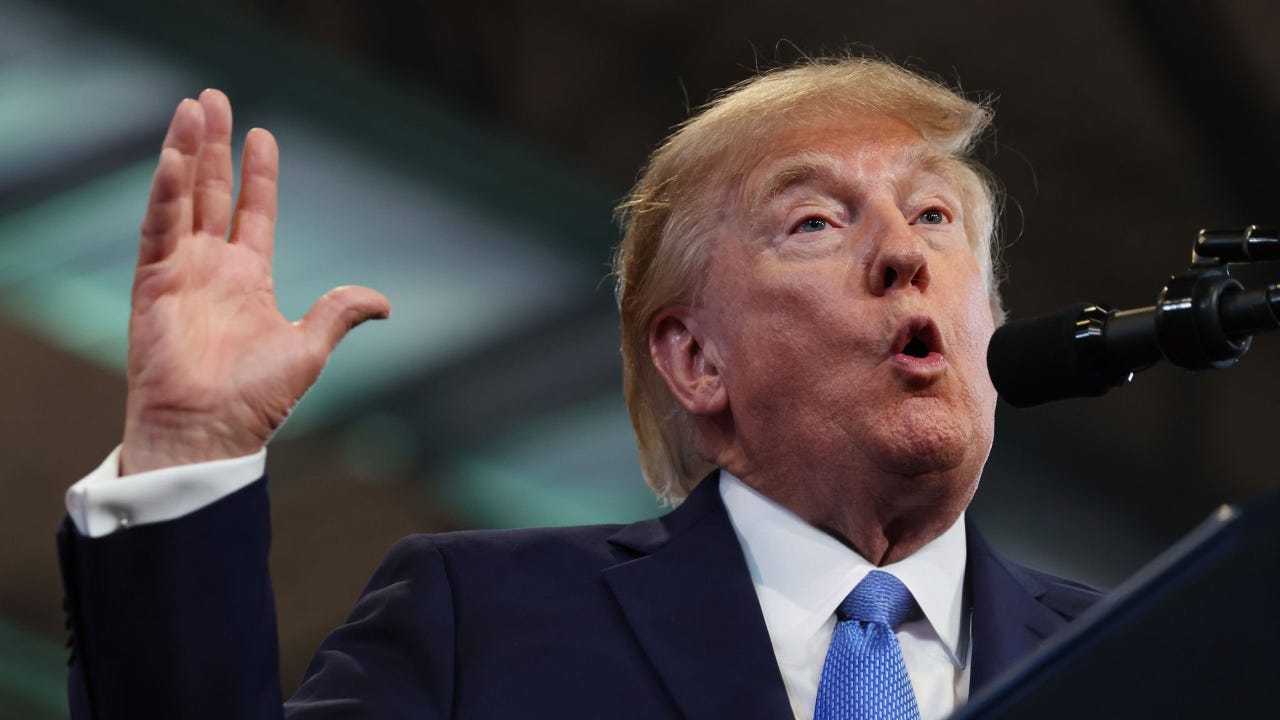
President Trump declared that he intends to make the Strait of Hormuz a U.S. territory after defeating Iran, dramatically escalating his push to establish American dominance over the strategic waterway as U.S. forces maintain a naval blockade and restrict maritime traffic.
The move would represent an extraordinary expansion of U.S. power over the world’s most important oil chokepoint—which historically carries roughly 20% of global petroleum consumption—and reinforces Trump’s argument that American military strength should determine who can safely transit this critical energy corridor, despite Iran and Oman’s existing jurisdiction and Iran’s rejection of U.S. claims.
🇺🇸 TRUMP’S HISTORIC DECLARATION
President Donald Trump says he intends to declare the Strait of Hormuz a territory of the United States, dramatically escalating America’s confrontation with Iran.
Trump made the announcement Friday during remarks on Long Island, New York, saying the declaration could come “pretty soon.”
The president portrayed the move as part of a broader effort to establish American control over a waterway critical to the global economy.
Trump argues that the United States is providing an important service to the world by challenging Iran’s ability to restrict international shipping.
No legal mechanism has yet been announced for converting the strait—which includes Iranian and Omani territorial waters—into U.S. territory.
⚓ U.S. NAVAL BLOCKADE
The United States has established a naval blockade aimed at preventing vessels from entering or leaving Iranian ports.
Trump described the American blockade as effectively impenetrable and said U.S. forces are determining which vessels are permitted through areas they control.
The strategy gives Washington powerful leverage by restricting Iran’s access to maritime trade while pressuring Tehran economically.
The blockade has become one of the most consequential components of Trump’s campaign against the Iranian government.
Trump has presented American naval strength as evidence that Tehran cannot dictate the rules of maritime commerce without facing U.S. resistance.
🚨 U.S. FORCES TAKE ACTION
American forces demonstrated their willingness to enforce the blockade this week when they disabled the Panama-flagged M/V Vela Nova.
U.S. Central Command said the vessel ignored repeated warnings while attempting to breach the blockade and proceed toward Iran.
A U.S. Navy MH-60 helicopter fired on the vessel, with reports saying Hellfire missiles were used to disable it.
All 17 crew members were accounted for, according to reporting on the confrontation.
The incident sent a strong signal that the Trump administration is prepared to enforce its restrictions with military force when vessels refuse American orders.
🛢️ WHY HORMUZ MATTERS
The Strait of Hormuz connects the Persian Gulf with the Gulf of Oman and is one of the world’s most strategically important maritime chokepoints.
Before the current conflict, roughly 20% of the world’s oil supply moved through the waterway, making uninterrupted passage critical to international energy markets.
Iran controls territory along the northern side of the strait, while Oman controls territory along its southern side.
Disruptions have sharply reduced commercial traffic and contributed to higher energy and transportation costs worldwide.
Securing reliable passage would therefore represent a major economic and geopolitical achievement for Washington.
🔥 IRAN REFUSES TO BACK DOWN
Iran has rejected Trump’s assertions of American control and insists it retains authority over its territorial waters in the Strait of Hormuz.
Tehran has continued using access to the waterway as leverage in its confrontation and negotiations with Washington.
Iranian actions against commercial shipping have further intensified tensions, with the United Arab Emirates accusing Iran of attacking an ADNOC vessel traveling through Hormuz this week.
The UAE said there were no injuries in that incident and called for Iran to stop the attacks and reopen the waterway.
The competing American and Iranian claims have transformed Hormuz into one of the central fronts of the wider conflict.
💰 ECONOMIC WARFARE INTENSIFIES
The Trump administration is combining military pressure with economic measures designed to weaken Tehran’s ability to sustain the confrontation.
Iran, meanwhile, is attempting to use restrictions on Hormuz to create economic pressure through higher global energy prices.
The conflict has consequently evolved into a struggle over which side can withstand economic pressure longer.
Washington is seeking to deprive Tehran of maritime revenue and force Iran back toward negotiations without allowing it to dictate the conditions for international shipping.
A successful reopening of Hormuz would deprive Iran of one of its strongest remaining forms of economic leverage.
🦅 AMERICA FIRST SHOWDOWN
Trump’s Hormuz declaration represents one of his most aggressive assertions yet that the United States—not Iran—should determine the security environment surrounding the critical shipping corridor.
The president has framed U.S. military operations as protecting not merely American interests but international commerce and countries dependent upon Persian Gulf energy exports.
Iran continues to resist those demands, meaning the ultimate status of the waterway remains unresolved despite America’s substantial military presence.
Any formal attempt to make Hormuz U.S. territory would raise major international-law and sovereignty questions because Iran and Oman currently possess territorial jurisdiction along the strait.
For Trump, however, the immediate message is centered on American power, freedom of navigation and preventing Iran from using one of the world’s most important waterways as economic leverage against the United States and its partners.
Latest News Videos