


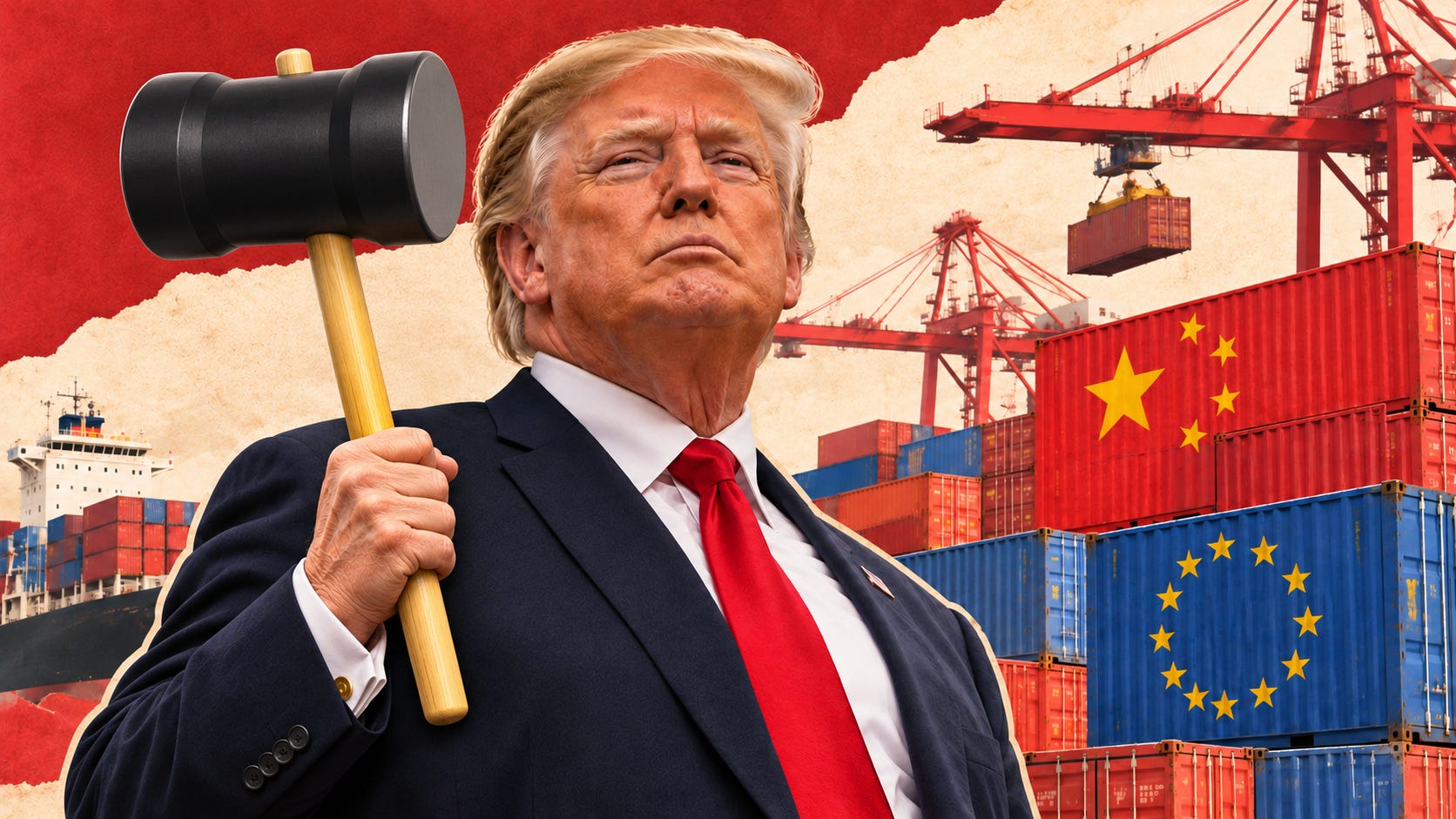
The Trump administration is preparing a new round of tariffs targeting China, Europe and other major trading partners after a Section 301 investigation into industrial overcapacity. The proposed rates are expected to honor existing trade deals as Democrats in the incoming Congress look to curb presidential tariff authority.
What’s happening
The Trump administration could announce new tariffs as soon as tonight, targeting major trading partners over government policies it says encourage excessive industrial production.
The proposed tariffs are expected to be targeted and stay within the terms of existing trade agreements, according to a person familiar with the plans. U.S. deals with the European Union and Japan set a 15% tariff ceiling on most imports.
The Wall Street Journal first reported the plans. The specific products and proposed rates have yet to be detailed.
Why the administration is moving ahead
The tariffs stem from an investigation launched in March under Section 301 of the Trade Act of 1974.
The administration argues that foreign subsidies and other state support encourage factories to produce more than markets can absorb. It says the resulting flow of low-priced goods puts American manufacturers at a disadvantage.
The move is part of Trump’s effort to rebuild his tariff program after the Supreme Court struck down his sweeping emergency tariffs earlier this year.
The fight over prices
The administration is pressing ahead after a Democrat sweep in the midterms, when affordability was a major voter concern.
House Speaker-designate Hakeem Jeffries said Sunday that lowering the cost of living would be a priority and singled out Trump’s tariffs. Democrats in the incoming Congress are also looking to limit presidential authority over trade policy.
New York Fed research indicates Americans bear much of the cost of tariffs. Federal Reserve officials are counting on the inflationary effects of earlier tariffs to fade while other price pressures persist.
The diplomatic stakes
The new duties could hit some of the same partners Washington has asked to help curb global overproduction. At a September meeting chaired by Treasury Secretary Scott Bessent, every G20 member economy except China agreed to tackle policies that distort trade and encourage overreliance on exports.
U.S. Trade Representative Jamieson Greer helped broker the Milwaukee Framework, an agreement among 28 economies to coordinate trade restrictions and curb subsidies tied to excess steel production.
The planned announcement also comes amid a separate trade dispute with Canada as negotiations continue over the future of the U.S.-Mexico-Canada Agreement.
LATEST NEWS VIDEOS