


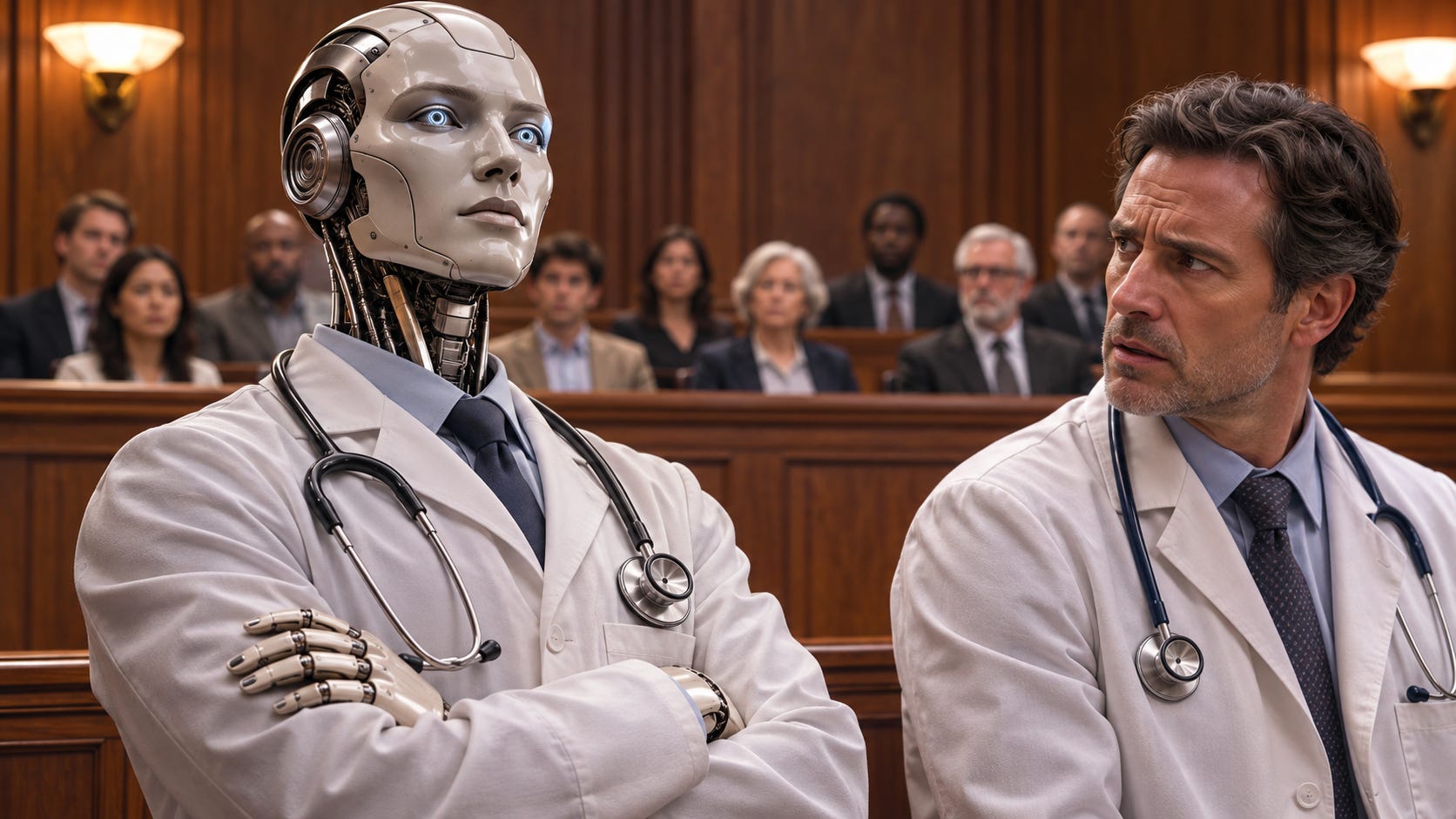
Mock jurors were more likely to fault doctors who disagreed with AI alerts in simulated malpractice cases, but fewer did so after learning the software’s error rate. The American Medical Association is pushing for laws to protect clinicians and require AI companies to disclose how well their products work.
What the Study Found
Mock jurors sided with patients more often when AI flagged an abnormality that a radiologist missed than when the software agreed with the doctor.
Missed brain bleed: 72.9% sided with the patient when AI flagged the bleed and the radiologist missed it. In the simulated case, the patient suffered irreversible brain damage.
Missed lung cancer: 78.7% sided with the plaintiff when AI flagged the cancer and the radiologist missed it. In that scenario, the patient died.
Participants were less likely to fault doctors when told how often the AI system made mistakes. The study measured how people judged simulated cases. Research in NEJM AI
Why It Matters for Doctors
Researchers warned that doctors may order extra scans or exams to protect themselves from lawsuits when they disagree with an AI alert. That could raise costs and add to patients’ anxiety, especially when the alert is a false positive.
Researchers also found that double-checking AI results could improve mock jurors’ perceptions of whether a physician met the standard of care.
Doctors Push for Liability Protections
The American Medical Association is calling for federal and state laws to protect clinicians when AI products harm patients.
The group also wants AI developers to carry adequate liability insurance and disclose their products’ performance and limitations.
LATEST NEWS VIDEOS